My Generation
Who
650 €
Estimated vinyl value [2026 Valuation]
Technical Identification Sheet
| RELEASE NUMBER (Discogs ID) | 930764 |
| Excel File Row | 298 |
| Date Added to Archive | 27/09/2026, 14:08:10 |
| Pressing Year | 1965 |
| Pressing Type (Press) | 1ST |
| Country of Pressing | UK |
| Record Label | Brunswick |
| Stereo / Mono | MONO |
| Catalogue Number | LAT 8616 |
| Barcode | N/A |
| Matrix / Runout Side A | MG-10256-1B B U 2B KT ("Deep Groove""N.C.B. / B.I.E.M.""-1B True 1st Press""Errore run-out è 2B ma LA B è mirrored Press") |
| Matrix / Runout Side B | MG-10257-1B BK 21 3M A KT |
| Sleeve Condition | EX |
| Media Condition | NM |
| Inner Sleeve Condition | EX |
| Genre | Rock |
| External Link | View Original Release ↗ |
Interested in this record?
The catalogue is for browsing; sales are by direct contact only. Write to me mentioning the record and I will reply with availability and terms.
Story & Background
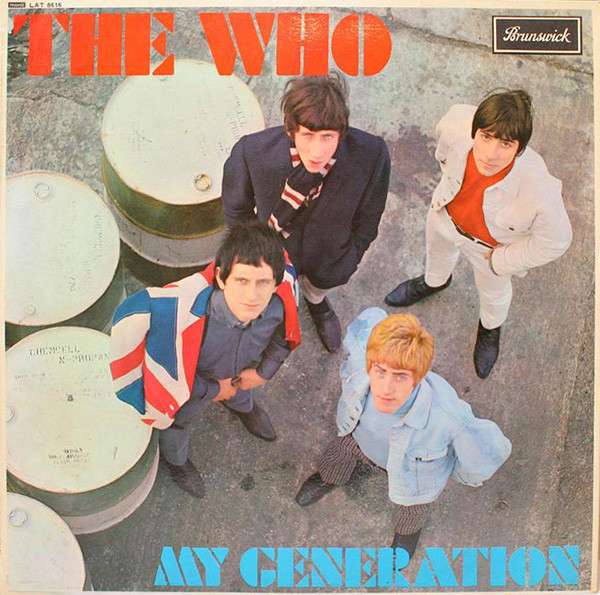
The dazzling debut of "My Generation" on Brunswick in 1965 is shrouded in an anecdote about its iconic cover, which reveals the subtle tensions between artistic ambition and the stringent market logics of the era. The famous photograph of the band members looking up towards the Union Jack, a symbol of a new wave of British rebellion, was not an entirely spontaneous and organic choice, but rather the result of a compromise. Initially, The Who and their far-sighted manager Kit Lambert aimed for a decidedly more radical and openly provocative image, one that better reflected their anti-establishment spirit and the chaotic energy of their concerts. However, the Brunswick label, with a more commercial vision and eager to present the group in a more immediately acceptable light for a wider audience, strenuously pushed for a less aggressive iconography, while still retaining a certain charge. This record label pressure led to the unusual choice of the national flag as a backdrop: a commercial imposition that, paradoxically, conferred upon the album an aura of rebellious patriotism. The result was an image that, though dictated by editorial calculations, managed to channel youthful fury within an immediately recognisable context, amplifying their cultural impact as the authentic voice of a generation that, with audacity, appropriated its own symbols and reinterpreted them.
Image Gallery


Official Tracklist
- A1 - Out In The Street
- A2 - I Don't Mind
- A3 - The Good's Gone
- A4 - La-La-La-Lies
- A5 - Much Too Much
- A6 - My Generation
- B1 - The Kids Are Alright
- B2 - Please, Please, Please
- B3 - It's Not True
- B4 - I'm A Man
- B5 - A Legal Matter
- B6 - The Ox
Audio / Video Preview