The Savage Young Beatles
The Beatles
128 €
Estimated vinyl value [2026 Valuation]
Technical Identification Sheet
| RELEASE NUMBER (Discogs ID) | 3345316 |
| Excel File Row | 128 |
| Date Added to Archive | 27/09/2026, 12:56:00 |
| Pressing Year | 1965 |
| Pressing Type (Press) | 1ST |
| Country of Pressing | US |
| Record Label | Savage |
| Stereo / Mono | MONO |
| Catalogue Number | BM 69 |
| Barcode | N/A |
| Matrix / Runout Side A | BM-69-A |
| Matrix / Runout Side B | BM-69-B |
| Sleeve Condition | EX+ |
| Media Condition | NM |
| Inner Sleeve Condition | NM |
| Genre | Classic Rock & Roots |
| External Link | View Original Release ↗ |
Interested in this record?
The catalogue is for browsing; sales are by direct contact only. Write to me mentioning the record and I will reply with availability and terms.
Story & Background
"The Savage Young Beatles" from 1965 is a striking example of the commercial ingenuity surrounding Beatlemania, despite being a record unauthorised by the band and notoriously despised by them. The tracks featured are not, in fact, official recordings by the "Fab Four" at the height of their fame, but rather come from the legendary and sometimes troubled Hamburg sessions of 1961-1962 with singer Tony Sheridan. During that period, the future Beatles were often credited as "The Beat Brothers" for contractual and marketing reasons by the German Polydor, which at the time considered the name "Beatles" too unusual for the local market. Savage Records, sensing the gigantic earning potential, acquired these "minor" masters and released them in the United States in 1965, obviously without the approval of the group or their main record label, EMI/Capitol. This album thus became one of numerous "exploitative" releases, re-proposing pre-fame material to monetise the quartet's global success, often with misleading covers and sub-optimal audio quality, elements which fuelled the contempt for it. A fascinating anecdote is that it includes "Cry for a Shadow", the only instrumental composition in The Beatles' discography credited to Lennon/Harrison. For a collector, this 1st pressing from 1965 is a historical artefact of great value, despite its controversial origin. It tells an essential part of The Beatles' discographical history and the global pop phenomenon.
Image Gallery
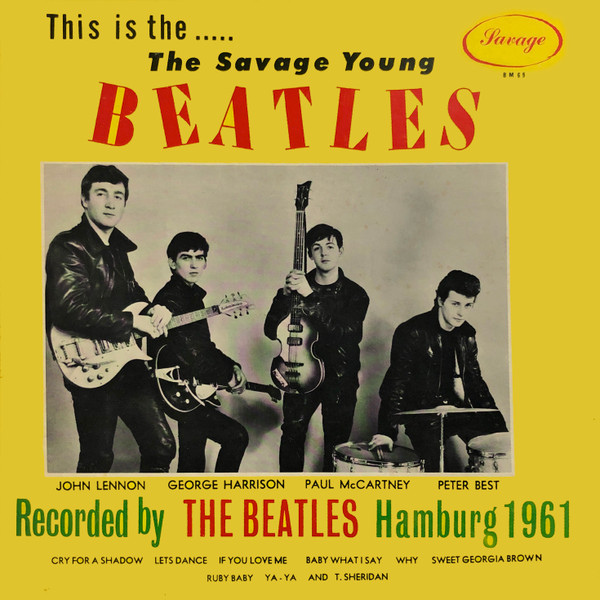


Official Tracklist
- A1 - Cry For A Shadow (2:23)
- A2 - Let's Dance (2:33)
- A3 - If You Love Me, Baby (2:53)
- A4 - What'd I Say (2:39)
- B1 - Sweet Georgia Brown (2:05)
- B2 - Ruby Baby (2:52)
- B3 - Ya Ya (5:08)
- B4 - Why (2:58)
Audio / Video Preview